
Via Gladiola
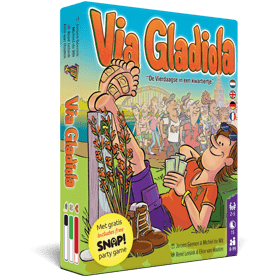 Via Gladiola to dynamiczna wspinaczkowa gra karciana, inspirowana legendarnymi Czterodniowymi Marszami w Nijmegen. W ciągu czterech rund – po jednej na każdy dzień – gracze starają się ukończyć marsz z jak najmniejszą liczbą pęcherzy.
Każdy dzień zaczyna się od kilometra 0 i kończy na 50. W swojej turze albo „idziesz”, dokładając wyższą kartę do stosu, albo „czekasz” i dobierasz karną kartę. Możesz bezpiecznie przesunąć się do 5 km. Idź 6–10 km do przodu i dobierz 1 kartę; 11–15 km kosztuje 2. Więcej nie jest dozwolone – przesadzasz.
Tylko 4. dnia, karty „mieczyków” mogą nieco ułatwić ci życie, ponieważ możesz je zagrać, aby poczekać bez konieczności dobierania karnej karty.
Dokończ swoją rękę efektywnie i unikaj gromadzenia się symboli pęcherzy. Po czterech dniach, wygrywa gracz z najmniejszą liczbą pęcherzy.
Liczba graczy: 2 - 5
Czas gry: 14 mn
Złożoność: 1 / 5
Zagraj w Via Gladiola i 1415 inne gry online.
Bez ściągania, bezpośrednio z twojej przeglądarki.
Ze swoimi przyjaciółmi i tysiącami graczy z całego świata.
Darmowe.


Zagraj w Via Gladiola i 1415 inne gry online.
Bez ściągania, bezpośrednio z twojej przeglądarki.
Ze swoimi przyjaciółmi i tysiącami graczy z całego świata.
Darmowe.
Streszczenie zasad
Via Gladiola OVERVIEW In Via Gladiola, players take part in a four-day walking challenge inspired by the Nijmegen Marches. Each turn, you decide whether to keep walking, take a short rest, or celebrate your progress with a Gladiola. Play your cards in sequence to advance — but pace yourself! Walking too far too fast causes injuries and discomfort. After four days, the player with the least total discomfort wins the march.
COMPONENTS 67 cards:
  • 49 Kilometer cards (values 1–49, each unique, showing 0–5 discomfort symbols (X) and 3 pace intervals)
  • 4 Start cards (value 0)
  • 6 End cards (value 50, 0–2 discomfort symbols)
  • 8 Gladiola cards (1–5 discomfort symbols)
SETUP
  1. Place one Start card (0) face up in the center of the table. This begins the walk pile.
  2. Shuffle all remaining cards — including the End cards (50) and Gladiolas — into a single draw pile.
  3. Deal 7 cards to each player.
  4. The player who most recently went for a walk begins.
PLAYING THE GAME Players take turns clockwise. On your turn, choose one of the following actions:
Walk, Stand Still or Play a Gladiola.
ACTION 1 - WALK Play one card from your hand with a higher value than the top card of the walk pile and place it on top to advance. How far you walk determines how tired you become. The top card on the walk pile shows 4 colored pace indicators that show the lowest number for 4 intervals. The intervals are the same for all cards:
 Interval Meaning
  +1 to +5 Safe pace – draw no cards
  +6 to +10 Pushed too far – draw 1 card
  +11 to +15 Overexerted – draw 2 cards
  > +15 Too far – not allowed
End cards (with value 50) may also be played (if the step size allows). Playing an End card immediately ends the current day.
ACTION 2 - STAND STILL Play nothing and draw 1 card from the draw pile. Sometimes resting is better than risking fatigue.
ACTION 3 - PLAY A GLADIOLA (Day 4 only) During day 4, you may choose this action instead of Walking or Standing Still. Play a Gladiola card and place it beside the walk pile as a symbol of your triumph. Gladiolas do not affect card order or cause any draws.
End of a Day When an End card (50) is played, the current day ends immediately. Leave the 50 in place, then add a new Start card (0) beside the pile to begin the next day.
Example of Play Three players — Alex, Bobbie, and Charlie — are walking on Day 1. The top card on the walk pile is 12.
 • Alex plays 16, a safe pace (+4).
     Alex draws nothing.
  • Bobbie plays 23, a pushed pace (+7).
     They draw 1 card.
  • Charlie can’t play higher than 23, so they Stand
     Still and draw 1 card.
  • Alex now plays 34, overexerting (+11) and drawing 2 cards.
  • Later, Bobbie plays a 50, ending Day 1. They place a new Start card (0) to begin Day 2.
Empty Draw Pile In the unlikely event that the draw pile runs out of cards, recycle the oldest completed day first. Take all cards from the earliest completed day that has not yet been recycled (starting with Day 1), excluding that day’s Start card (0). Shuffle those cards to form a new draw pile. If the pile runs out again later, repeat the process with the next oldest completed day (Day 2, then Day 3). When needed, continue in this way until the end of Day 4.
End of the Game When the fourth day ends it is time for final scoring to determine the winner: • Each player adds up the number of discomfort symbols on the cards remaining in their hand. • The player with the lowest total discomfort wins. • If tied, the player with fewer cards wins. • If still tied, players share the victory.